
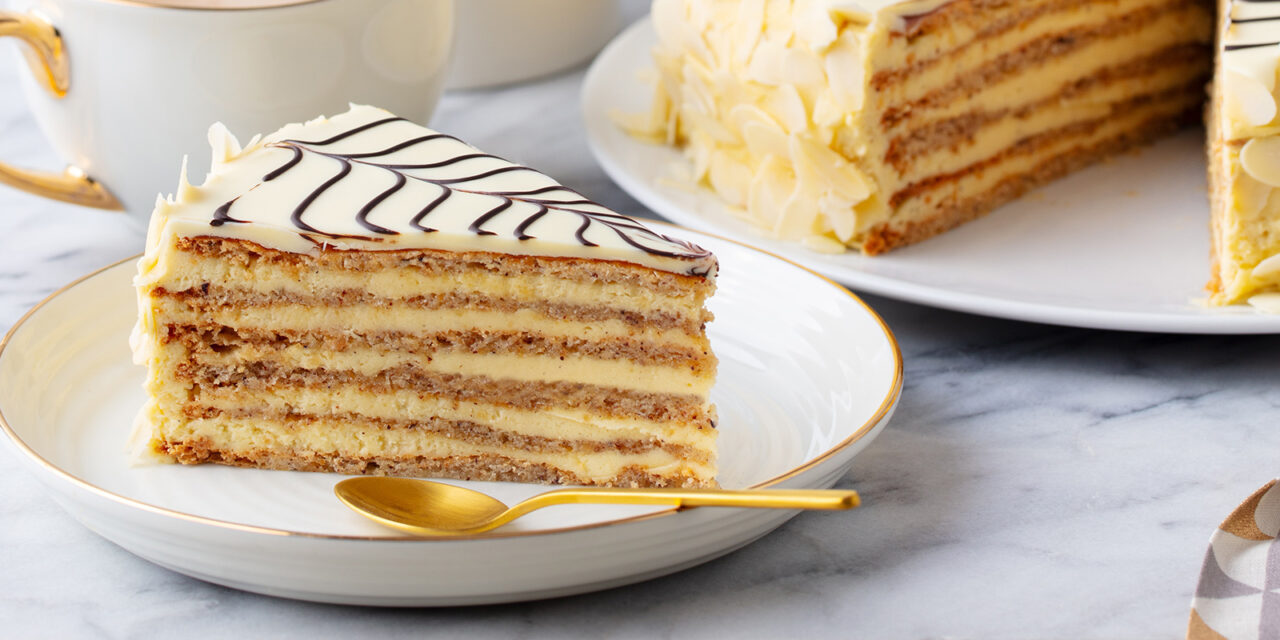
Here’s an (incomplete) list of Hungarian sweets that we think you should try during your trip!
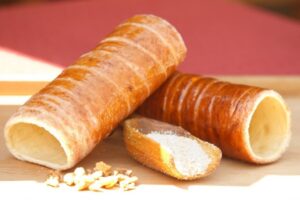
1- Kürtőskalács (chimney cake)
The chimney cake, originating from Transylvania, is based on a very simple recipe. The first traces of it date back to the 18th century, to the regions inhabited by the Székelys of Transylvania. It is a street food dessert, so you can find it in the kiosks along the road.
It is a roll of sweet bread, covered with toppings of your preference: nuts, cocoa, vanilla, coconut, cinnamon, etc.
2- Dobos cake
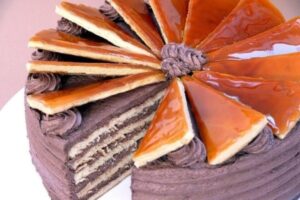
The quintessential Hungarian cake. Very good and also rich in calories, like many other dishes of the Hungarian cuisine. Invented in 1884 by chef Dobos, it is made up of 6 layers of sponge cake, with chocolate and butter cream between each layer and a caramelised topping to finish. The great innovation of the time was the use of butter cream!
A buttery and caloric cake, perhaps ideal for cold winter days, rather than summer.
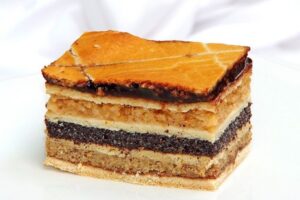
3- Zserbó
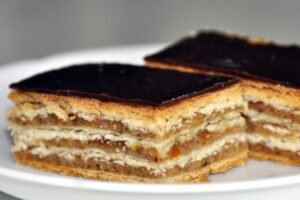
A dessert born from the invention of Emil Gerbeaud, a pastry chef whose café is still one of the most renowned in Budapest. The dessert is made of layers of shortbread layered between apricot, walnut and chocolate jam.
It is one of the typical pastries of the Christmas table spread.
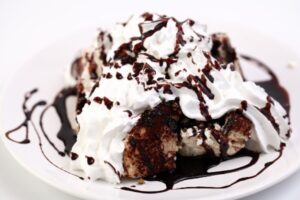
4- Somlói galuska
Perhaps the most loved dessert by Hungarians was invented in the Gundel restaurant in the 1950s.
Sponge cake, vanilla cream, soaked in liquid chocolate and covered in whipped cream. A real calorie bomb!
5- Palacsinta
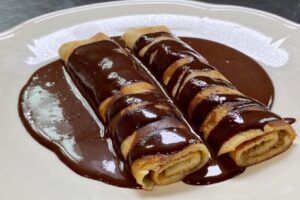
The traditional “Hungarian crepes”. You can find it soaked in jam, chocolate, walnuts, nutella. In short – in any way! It is a dessert that is typically prepared at home because of its simplicity. Or you can often find it as a dessert in typical Hungarian restaurants or set menus.
The Gundel version is the most “abundant” with chocolate, nuts and whipped cream, all together!
6- Flódni
The traditional dessert of the Hungarian Jewish community. It’s ideal tasting it in a kosher pastry shop in the Jewish quarter. During our tour of the Jewish quarter we recommend some of them.
The Flódni has four layers of walnuts, jam, poppy, apple. It isn’t a very “sweet” dessert as such but its contrasting flavours create a unique taste.
7- Rákóczi Túrós
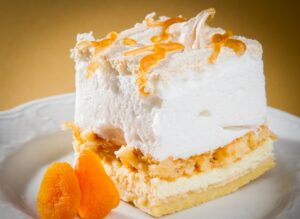
A mountain of Hungarian sweet ricotta (different from the Italian one) rises from a base of short pastry, with a layer of jam and a meringue roof on top.
A unique set of flavours, invented in the early 1900s by one of the most famous Hungarian chefs, Rákóczi to be precise.
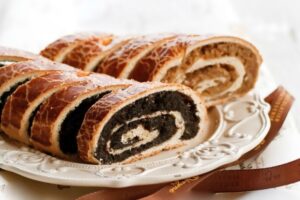
8- Beigli
Beigli (or Mákoskalács) is a traditional Hungarian Christmas and Easter dessert.
A poppy seed rolled cake with a rich and tasty flavour. You can also find it in the walnut version too.
8- Eszterházy torta
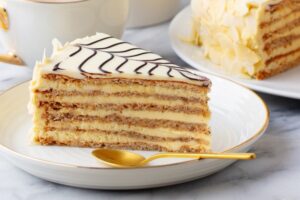
Unlike the other cakes, the name does not come from the inventor but from the count who appreciated this dessert more than anyone else. A pasty born during the years of the dual monarchy and still one of the most renowned in Hungary.
Nowadays there are different variations, all very good. The traditional recipe includes butter cream and walnut paste.
Follow our facebook page and visit www.talesofbudapest.com for more information!


